Mass loaded vinyl, usually shortened to MLV, is one of the simplest and most reliable ways to add sound-blocking weight to a wall, floor or ceiling without tearing the whole thing apart. It is thin, dense and flexible, which is exactly why it has become a go-to material for DIY soundproofing projects right across Australia.
The catch is that MLV only works properly when it is installed properly. A couple of small gaps, a loose seam or an unsealed edge can quietly undo most of the benefit you paid for.
This guide walks through what MLV is, the tools you need, and the step-by-step method for walls, ceilings and floors. We will also cover the mistakes that trip up a lot of first-timers so you can avoid them from the start.
What is mass loaded vinyl?
Mass loaded vinyl is a high-density sheet made by blending vinyl with natural mineral salts to pack a lot of weight into a thin, bendable membrane. That weight is the entire point of the product.
Soundproofing leans on a simple idea often called the mass law: the heavier and denser a barrier is, the harder it becomes for sound to push through it. Sound is really just vibration travelling through a material and then through the air on the other side. A dense, limp sheet like MLV resists that vibration far better than a hollow plasterboard wall does on its own, so less noise makes it to the other side.
Because it is flexible and easy to cut, MLV can be layered and fitted into spots where a rigid board simply will not go. Sound-Stop 5, the mass loaded vinyl we stock, is a good example. It is a heavy polymer membrane that can cut noise by up to 27dB, handles temperatures from -20°C to 90°C, and works on walls, floors and ceilings alike.
One thing worth clearing up early: MLV blocks noise, it does not absorb echo. If your problem is a room that sounds boomy or reverberant, you want acoustic panels or absorbers instead. MLV is for stopping sound from getting in or out. The two jobs are different, and it is common to use both in the same project.
What you will need
Before you start, gather your materials and tools. Having everything on hand makes the job far smoother, because MLV is heavy and you do not want to be wrestling a half-hung sheet while you hunt for a fastener.
Materials:
- Mass loaded vinyl, with enough length to cover the surface plus a little extra for trimming
- Acoustic sealant for sealing seams, edges and any gaps
- Acoustic-rated tape to bridge and seal the joins between sheets
- Mechanical fasteners suited to your surface: wafer head screws or staples for timber, self-drilling wafer head screws for steel. Plastic or fender washers help spread the load and stop the heads pulling through
Tools:
- Tape measure and a T-square or straight edge for clean, square cuts
- A sharp utility knife or Stanley knife (MLV cuts cleanly, so there is no need for power tools)
- A drill or staple gun, plus a caulking gun for the sealant
- A sturdy ladder or trestle, and ideally a second person for ceilings
Not sure how much material to order? Work off the total surface area, then add roughly ten per cent for overlaps and offcuts. Our DIY soundproofing guide is a useful companion read if this is your first project.
Before you start: planning and prep
Good preparation is where most of the result is won or lost. Take the time on these steps and the install itself becomes the easy part.
Find the weak points first. Sound behaves a bit like water: it finds the easiest path through. Before you cover anything, look for the gaps that noise is actually using, such as around power points, light fittings, vents, skirting, door frames and where the wall meets the floor or ceiling. Sealing these is just as important as the vinyl itself.
Measure carefully and let the material settle. Measure the surface, then cut your sheets to size on a clean, flat floor. If the MLV has been rolled up tightly or stored somewhere cold, let it relax at room temperature for a while so it lies flat and is easier to handle.
Respect the weight. MLV is dense by design, so a full roll is genuinely heavy. Cut it into manageable lengths, lift with your legs, and get a hand for overhead work. This is not a material to muscle on your own from the top of a ladder.
How to install mass loaded vinyl on walls
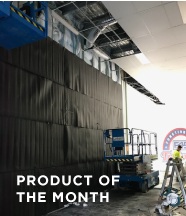
Walls are the most common MLV project and the most straightforward. The aim is full, continuous coverage with every join and edge sealed.
- Cut your first sheet to the wall height, allowing a small overlap at the top and bottom rather than leaving a gap.
- Position the sheet against the studs or the existing wall surface, starting in one corner and keeping it as flat and taut as you can.
- Fasten along the top edge first, then work down and across, fixing into the studs where possible. Space your fasteners evenly and use washers so the heads do not tear through the vinyl.
- Butt the next sheet up against the first so the edges meet without overlapping unless your product calls for an overlap. Seal that join with acoustic sealant and run acoustic tape over it to keep it airtight.
- Seal right around the perimeter, including the top, bottom and both sides, plus any cut-outs you made for power points or switches.
From here you would normally cover the MLV with a new layer of plasterboard for the best result, which sandwiches the vinyl and adds even more mass. If you are soundproofing a shared wall, our guide on soundproofing a bedroom and party walls covers the wider build-up in more detail.
How to install mass loaded vinyl on ceilings
Ceilings are tougher, mostly because you are working overhead against gravity with a heavy material. The method is similar to walls, but two points matter more here.
- Plan your sheet layout so you are lifting the smallest practical sections. A second pair of hands is close to essential.
- Fix the MLV to the joists, sealing each seam and the full perimeter as you go, exactly as you would on a wall.
- Wherever you can, decouple the layer underneath. Fitting resilient channels before the plasterboard creates a small break that stops vibration carrying straight through the structure, which makes a real difference to impact noise from above.
Decoupling is the step that separates an okay ceiling from a genuinely quiet one. For a full worked example, including where resilient channels sit in the build-up, see our step-by-step guide to soundproofing a home theatre or media room.
How to install mass loaded vinyl on floors
On floors, MLV is used as a dense underlayer to cut the noise that travels between levels, such as footsteps and furniture being dragged about.
- Make sure the subfloor is clean, dry and reasonably smooth so the vinyl sits flat.
- Lay the MLV across the floor, butting the edges together and sealing or taping the seams so the layer stays continuous.
- Run the material slightly up the walls at the edges where you can, so the floor layer is not leaking sound straight out at the perimeter.
- Cover it with your chosen flooring or underlay. MLV is happy being laid over joists or fixed to the underside of a ceiling below, depending on which side of the structure you are treating.
Sealing: the step most people get wrong
If you take one thing away from this guide, make it this. Mass loaded vinyl works on two principles at once: it has to be dense, and it has to be sealed. A barrier with even small gaps leaks sound the same way a cracked window does, and no amount of extra mass makes up for an unsealed seam.
So treat sealing as part of the install, not an afterthought. Seal every seam between sheets, every edge around the perimeter, and every cut-out for fittings. Use a quality acoustic sealant that stays flexible rather than a rigid filler that will crack over time. It is slow, slightly tedious work, and it is the difference between a wall that is noticeably quieter and one that barely changed.
Common mistakes to avoid
- Leaving gaps. Unsealed seams and edges are the number one reason MLV underperforms. Seal everything.
- Using it to fix echo. MLV blocks sound, it does not absorb it. If a room sounds hollow, you need absorbers, not more mass.
- Under-fastening. The material is heavy. Too few fasteners, or fasteners without washers, and the sheet sags or tears at the heads.
- Skipping decoupling on ceilings. Bolting everything tight together lets vibration pass straight through. A resilient layer is worth the extra step.
- Forgetting the flanking paths. Noise also sneaks around the edges through doors, vents and gaps. Treat those too, or they become the new weak point.
Can I install MLV myself, or should I call a professional?
For most straightforward wall and floor jobs, MLV is well within reach of a confident DIYer. The skills involved are measuring, cutting, fastening and sealing, none of which need specialist trade knowledge. The main challenge is the weight and the patience required to seal everything properly.
Larger or more complex projects, such as a full ceiling, a room-within-a-room build, or a commercial space with strict noise targets, are where professional help starts to pay off. If you are tackling a tricky source like a shared boundary, our guide on stopping noise from noisy neighbours is a good place to weigh up your options before you commit.
The bottom line
Mass loaded vinyl is one of the most cost-effective upgrades you can make to a noisy room, and the install itself is genuinely achievable at home. Measure carefully, fasten securely, and above all seal every seam and edge. Get those basics right and the result speaks for itself. If you want to plan the rest of your project around it, our home soundproofing guide ties the whole approach together.
Frequently asked questions
Does Bunnings sell mass loaded vinyl? MLV is a specialist acoustic product, so it is not something you will reliably find on a general hardware shelf. Buying from a soundproofing supplier means you get a known weight and density, the right tape and sealant to go with it, and advice on how much you actually need.
How many layers of MLV do I need? One properly sealed layer makes a clear difference for most homes. Adding a second layer increases the mass and the noise reduction, which is useful for stubborn low-frequency noise, though each extra layer gives a smaller gain than the last.
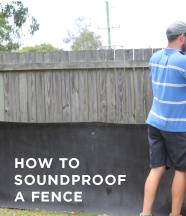
Can mass loaded vinyl be used outdoors? It can, but it needs to be in a fixed, static position and covered with a protective layer such as timber or fibre cement sheet. Left exposed and free to move, wind will fatigue the material over time.
Will MLV completely soundproof a room? No single product makes a room perfectly silent. MLV is a powerful part of the picture, and combined with sealing, decoupling and good window treatment it can dramatically reduce the noise you hear day to day.