If a room sounds harsh, if voices seem to bounce around, or if you find yourself lifting your voice in your own lounge room, acoustic panels are usually the answer. They are a simple product with a lot of confusing marketing wrapped around them, which is why so many people end up buying the wrong thing.
This guide covers what acoustic panels actually are, the types you will come across in Australia, where they work best, and the checks worth making before you spend a cent.
What are acoustic panels?
Acoustic panels are boards, tiles or blankets made from porous material that absorb sound energy instead of reflecting it back into the room. They reduce echo and reverberation, so speech becomes clearer and the space feels calmer and less tiring to be in.
Most are made from open, breathable materials: acoustic foam, recycled polyester, stone wool, glass wool, or a perforated metal or timber face over an absorptive core. The common thread is that sound waves can get into the material rather than bouncing off a hard surface.
You will see the same product sold under several names. Sound absorbing panels, acoustic wall panels, soundproofing panels and sound deadening panels usually describe the same thing, so focus on the specifications rather than the label.
How acoustic panels work
Sound is energy travelling through air. When it hits a hard surface such as plasterboard, tile, glass or concrete, most of that energy comes straight back. Those reflections pile on top of the original sound, which is why a tiled bathroom rings and a carpeted bedroom does not.
An acoustic panel gives the sound wave somewhere to go. The wave passes into the porous structure, moves the fibres or cell walls as it travels, and loses energy to friction along the way. Less energy returns to the room, so the reverberation time drops and the room settles down.
How much a panel absorbs is described by its NRC, or Noise Reduction Coefficient. It is a single number between 0 and 1, where 0 reflects everything and 1 absorbs almost everything across the tested frequencies. Good panels generally sit between 0.7 and 1.0. Fibertex, for example, carries an NRC of 1, which is the highest rating available.
There are two things NRC will not tell you. It averages the mid and high frequencies, so it says little about how a panel handles bass. And it says nothing at all about stopping sound moving from one room to another, which is where most people go wrong.
Absorbing sound is not the same as blocking it
This single distinction causes more wasted money than anything else in soundproofing.
Acoustic panels improve the sound inside a room. Sound barriers stop sound travelling between spaces.
If the problem is echo, harsh reflections, muddy audio on video calls, or a cafe where nobody can hear each other, absorption is what you need. If the problem is the neighbour’s dog, traffic noise, or the television through a shared wall, panels on their own will disappoint you. Blocking noise takes mass, sealed gaps and separation: barrier products, insulation in the cavity, better seals or acoustic windows.
Plenty of projects need both working together. Our Soundproofing 101 guide walks through where each one belongs before you start buying.
The main types of acoustic panels
Panels are easiest to compare by what they are made from, because the material drives the performance, the price and where you can install it.
Acoustic foam panels
Melamine or polyethylene foam, typically 25mm to 50mm thick, cut to size on site and fixed with adhesive or tape. Foam is the fastest and cheapest way to take the edge off a reverberant room, and it handles the mid and high frequencies that make speech muddy.
The catch is thickness. A thin foam panel does very little below about 250Hz, so if the room feels boomy rather than echoey, foam alone will not fix it.
Polyester and fabric wrapped panels
Usually made from recycled PET, often faced in fabric and supplied in colours and shapes. These are the panels you see in offices, meeting rooms and classrooms. They perform well, they are non-irritant to handle, they double as pinboards and desk screens, and they are easy to specify for a commercial fit-out.
Stone wool, glass wool and polyester batts
This group gives you the most absorption per dollar and works across a wider frequency range, including further down the scale than foam. Batts and semi-rigid boards go inside wall cavities and ceiling joists during a build or renovation, or into a timber frame with fabric stretched over it if you are making your own panels. If you are building rather than decorating, start here.
Timber slat and decorative panels
Timber or MDF slats mounted over an acoustic felt backing. They look excellent and they do absorb, but the real work is done by the backing rather than the timber, and the results are modest compared with a purpose-built absorber of the same size. Buy these when the look is the priority and the acoustic improvement is a welcome bonus. Always check the published NRC before assuming they will fix a difficult room.
Composite panels that absorb and block
Some panels pair an absorptive face with a dense core, so they soak up reflections on one side while adding mass that resists sound passing through. They are heavier and cost more, but they save you building up two separate layers where space is tight, such as a party wall or a media room.
Outdoor and industrial panels
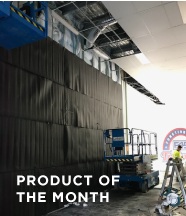
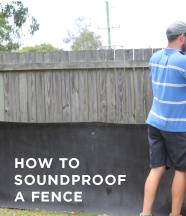
Weather and UV rated panels built for fences, hoardings and equipment enclosures. These are what you want around a pool pump, an air conditioning unit, a generator or a construction site. Indoor foam and batts will hold water and break down outdoors, so the two are not interchangeable. Our guide to Outback Acoustic Panels covers how the outdoor range is built and where it is typically used.
Bass traps and diffusers
Bass traps are thicker absorbers designed for corners, where low frequency energy builds up. Diffusers scatter sound rather than absorb it, keeping a room lively without the harsh reflections. Both are worth adding in critical listening spaces such as studios and mixing rooms, and neither is necessary in a typical office or lounge room.
Where acoustic panels are used
Any room with hard surfaces and not enough soft ones is a candidate. The most common jobs we see are:
- Home theatres and media rooms, where reflections blur dialogue and soften impact
- Recording studios, podcast rooms and home offices, where clean audio matters
- Open plan offices and meeting rooms, where speech carries and concentration suffers
- Restaurants, cafes and bars, where a full room becomes too loud to talk in
- Classrooms, halls, churches and gyms, and indoor pools and school halls, where long reverberation makes announcements unintelligible
- Workshops, plant rooms and machinery enclosures, where noise builds up in a confined space
- Outdoor equipment and boundary fences, where noise needs treating at the source
How to choose the right acoustic panel
Six checks, in order. Get the first one right and the rest fall into place.
- Work out what you are actually solving. Echo and harshness inside the room means absorption. Noise arriving from somewhere else means barriers, seals and mass. Be honest here, because no panel will fix the wrong problem.
- Compare NRC, not photographs. If a product page does not publish an absorption figure, that usually tells you something. A panel with a rating of 0.9 is doing roughly twice the work of one rated 0.45 in the same spot.
- Match thickness to the problem frequency. Thicker panels and air gaps behind them reach lower frequencies. Speech and clatter respond to 25mm to 50mm. Boomy bass in a media room needs more depth, or corner treatment.
- Decide where it is going. Surface mounted on a wall, suspended from a ceiling, hidden inside a cavity or exposed to the weather are four different products. Check the fixing method suits your substrate, whether that is plasterboard, brick, block or steel.
- Check the compliance requirements. Commercial and public spaces usually need a fire rated product, and some fit-outs have specific requirements around the finish. Sort this before you order, not after.
- Decide how much it needs to be seen. A plant room can take the raw industrial option. A reception area probably cannot. There is usually a product that satisfies both the numbers and the look, but you need to say so up front.
How many acoustic panels do you need?
As a working guide, treating 15 to 25 per cent of a room’s hard surface area makes a clear, audible difference in most homes and offices. Rooms with tiled or polished concrete floors, high ceilings or a lot of glass sit at the upper end of that range. Recording and mixing spaces usually need more again, and they need it placed deliberately rather than spread evenly.
Placement matters as much as quantity:
- In a home theatre or studio, treat the first reflection points on the side walls, the wall behind the listening position, and the ceiling above it. Add corner treatment if bass is the issue.
- In an office, classroom or restaurant, spread the coverage across the walls and ceiling rather than concentrating it in one area.
- Do not forget the ceiling. It is usually the largest untreated surface in the room and the most commonly overlooked one.
Even coverage across two surfaces will always beat a dense cluster of panels on one wall.
Do acoustic panels actually work?
Yes, for the job they are built to do. Reduce the reflections in a room and the difference is immediate and obvious, particularly in speech clarity. Most people notice it the moment the last panel goes up.
What they will not do is stop noise coming through a wall from next door, and no amount of foam will change that. Thin panels will not tame bass. Decorative panels will not perform like rated ones. And it is possible to overdo it: a room with too much absorption and nothing reflective left feels flat and lifeless, which is why even studios keep some surfaces live.
Set the expectation correctly and panels are one of the most cost effective acoustic products you can buy. Set it incorrectly and they are a disappointment through no fault of the product.
Frequently asked questions
What are acoustic panels made of?
Most are made from open cell foam, recycled polyester, stone wool or glass wool. Some use a perforated metal or timber face over an absorptive core. The material is always porous, so sound passes into it rather than bouncing off.
Do acoustic panels stop noise from neighbours?
No, not on their own. Panels absorb sound within a room. Stopping noise from a neighbouring property or a busy road needs mass and sealing: barrier products, cavity insulation, better door and window seals, or acoustic glazing.
What are the disadvantages of acoustic wall panels?
They will not block noise between rooms, thin panels do little for low frequencies, and covering too much of a room can leave it sounding dead. Some also need care around fixing and cleaning, particularly fabric faced products in high traffic areas.
How do you install acoustic panels?
Most surface mounted panels go up with construction adhesive, heavy duty double sided tape or mechanical fixings, straight onto plasterboard, brick or block. Foam and blanket products can be cut on site with a sharp blade. Batts and boards go into wall and ceiling cavities during construction.
Can acoustic panels be used outdoors?
Only if they are rated for it. Weather and UV rated panels are made for fences, enclosures and construction sites. Indoor foam and batts absorb water, sag and break down once they are exposed.
What is a good NRC rating?
Anything from 0.7 upwards is doing real work, and 0.9 to 1.0 is excellent. Compare products at the same thickness, because a thicker panel will almost always test better than a thin one made from the same material.
Getting it right the first time
Choosing acoustic panels comes down to one honest question about your room and a quick look at the numbers on the product page. Answer those two and the rest is straightforward. Our full range of sound absorbing panels covers foam, boards, batts, blankets and heavy duty industrial panels, with the acoustic performance published for every product.
If you would rather not work it out alone, tell us the room dimensions, what the surfaces are made of and what you are using the space for, and we will tell you what we would use and how much of it. Call 07 3287 7647 or send through the details of your space.